Reflections from: Emma Drake, Associate Director, thinkingplace and Founder of Henbe Communications
As the shortlist for the UK’s first Town of Culture 2028 was announced, much of the conversation understandably focused on the 15 places still in the running. But I found myself thinking about a different question.
What can the next generation of New Towns learn from the places that are already competing to define who they are?
This isn’t really a story about a cultural competition. It’s a story about identity.
Every town that entered the process has had to articulate what makes it distinctive. Not simply what assets it has or what events it could host, but the deeper questions of place.
Who are we?, What makes us different?, What do we want to become?
Those are difficult questions for established towns with centuries of history behind them. They are arguably even more important for the new settlements that are now emerging across the UK.
Beyond bricks and infrastructure
The current programme of New Towns represents one of the biggest opportunities in a generation to create places that people genuinely want to belong to.
Much of the discussion rightly centres on housing numbers, transport connections, schools, healthcare, employment and green infrastructure. These are the essentials of successful place delivery.
But they are not, on their own, what creates a place that people love.
Too often we think of identity as something that develops organically once the buildings are complete.
In reality, identity is shaped from the very beginning.
It is influenced by the stories we choose to tell, the cultural activities we invest in, the spaces we create for communities to come together, the heritage we protect—or create—and the opportunities we give people to shape the future of where they live.
These are not ‘nice to haves’. They are fundamental ingredients of long-term place success.
Planning for future relevance
One phrase I keep returning to is future relevance.
How do we ensure that the places we are building today will still feel meaningful, distinctive and valued in 30, 50 or even 100 years’ time?
That question is becoming increasingly important.
The most successful towns are rarely defined by their housing stock or their road layouts. They are remembered for their character, their culture, their institutions, their traditions and the pride people feel in calling them home.
Those qualities don’t appear by accident.
They are nurtured over decades through investment, participation and local leadership.
If we want today’s new settlements to become tomorrow’s great towns, then we need to start thinking about future relevance now, not once the last phase of development is complete.
Could today’s New Towns become tomorrow’s Towns of Culture?
Imagine a new settlement opening over the next decade.
Fast forward thirty years.
Could it credibly bid to become a UK Town of Culture?
If the answer feels uncertain, perhaps we’re asking the wrong questions during the planning process.
Rather than focusing solely on what needs to be delivered physically, perhaps we should also be asking:
- What stories will people tell about this place?
- What traditions might emerge?
- What cultural infrastructure are we creating?
- How will residents influence the identity of their community?
- What will make this place unlike anywhere else?
- Identity cannot simply be masterplanned…. But, it can absolutely be enabled.
Learning from existing places
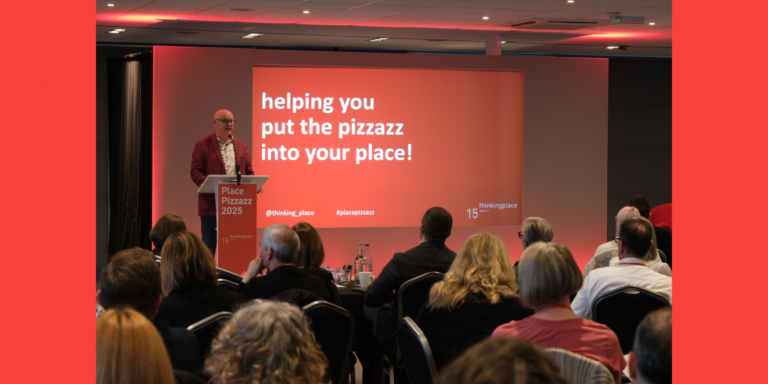
This links directly to a question I’ve explored previously, and more recently at thinkingplace’s ‘Place Pizzazz’ event in Chester;
What can new places learn from existing towns and cities?
The Town of Culture programme provides one answer.
It demonstrates that successful places are those capable of bringing people together around a shared identity and shared ambition.
The competition itself matters.
But perhaps its greatest value lies in encouraging places to ask fundamental questions about who they are and what they want to become.
Those are exactly the conversations we should also be having in every New Town.
Because in the end, future relevance won’t be determined solely by the quality of the homes we build. It will be determined by whether, decades from now, people feel proud to say, ‘This is my place.’
Source: https://www.gov.uk/government/news/shortlist-for-uk-town-of-culture-revealed
Image credit: Northstowe, Homes England